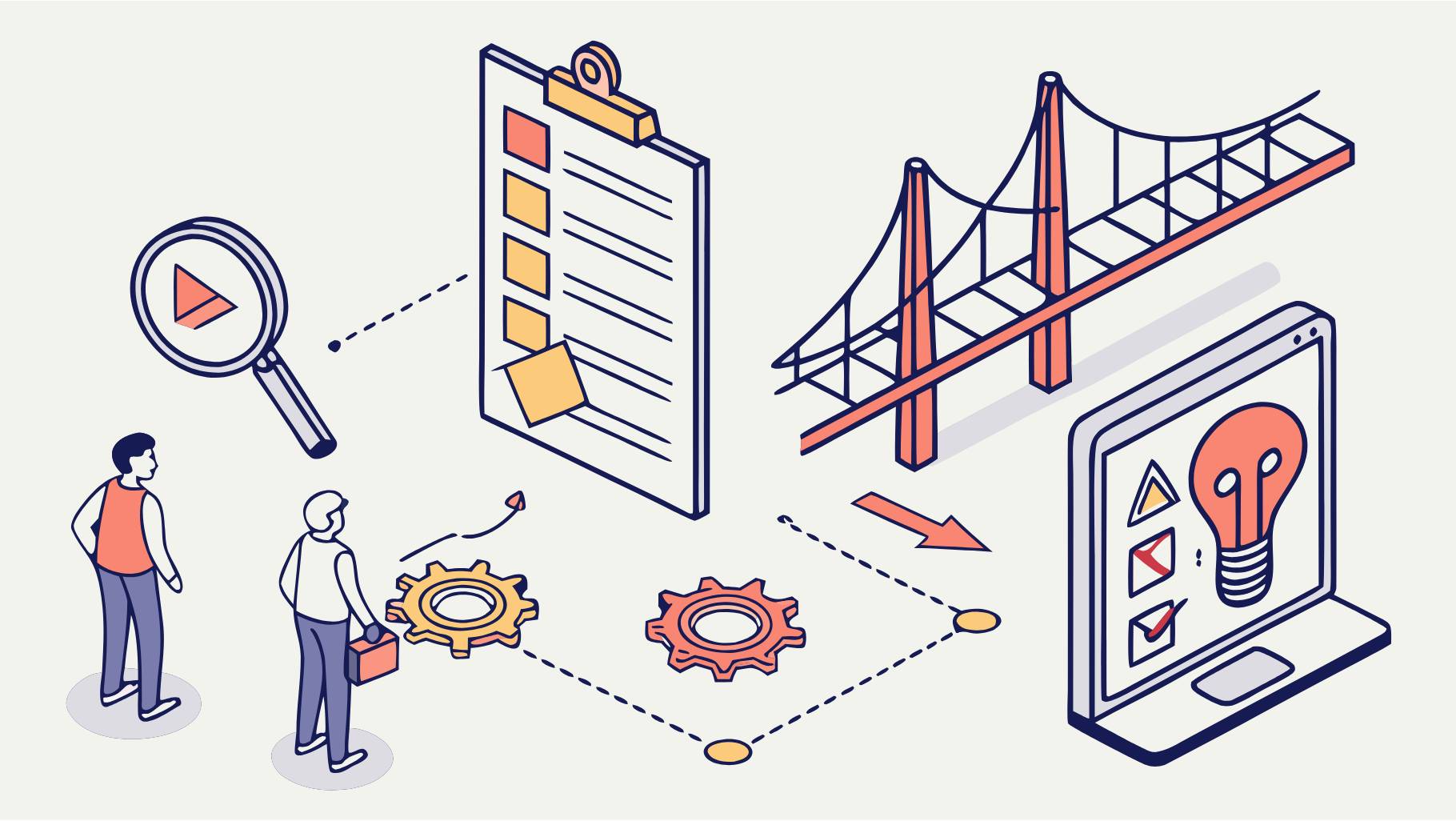
Building a web application that actually works for a business starts long before a single line of code is written. Strategy is the bridge between discovery—what the client thinks they need—and execution—what the product actually becomes. Get the strategy right and you reduce scope creep, control costs, and deliver something that meets business goals.
Charge for Discovery and Strategy (Yes, really)
Discovery and strategy are not optional extras. They are tangible deliverables that prevent costly surprises later on. When requirements are unique or the project needs complex integrations, bill for a dedicated strategy phase. That investment produces a documented plan you and the client can rely on—useful whether you continue the build or a different team takes over.
Discovery is a tangible asset you can use later—even with another agency.
Practical Discovery: Questionnaires, Calls, and One-on-Ones
Discovery can start on a sales call with focused questions. For e-commerce, ask:
- How many products do you have?
- What is monthly traffic and order volume?
- Do you have ERP or CRM integrations?
Use questionnaires for detailed answers, but pair them with calls when questions get technical. For ERP, CRM, or licensing systems you will often need deep one-on-ones with technical stakeholders or the vendor’s tech team to capture the right business rules.
Define Project Goals Clearly
Before development, get alignment on core objectives. Typical focus areas include:
- Branding — Logo, colors, and web style guidelines. If a client lacks branding, make that a separate deliverable.
- SEO — Existing footprint, top landing pages, backlink profile, and potential migration risks.
- Site Speed — Caching, CDN, optimization plugins, and architecture choices.
- E-commerce — Product counts, shipping, tax, subscriptions, bookings, and payment flows.
- Timeline and Reporting — Milestones, sprint cadence, QA cadence, and reporting frequency.
Estimating: Flat Rate vs. Sprint-Based
There is no single estimation model that fits every project. Two common approaches:
- Flat Rate — Works when scope is well defined and limited. Make inclusions and exclusions explicit to avoid misunderstandings.
- Sprint-Based — Useful when parts of the project are unknown or highly technical. Quote an initial number of sprints and deliverables, then plan additional sprints as discoveries occur.
When you need to pivot from an agreed scope, pause and discuss additional time or cost. If a client expects extra work without extra pay, that’s where contract clarity saves relationships.
Technology Stack: Pick and Disclose
Be explicit about the platforms, plugins, and builders you’ll use. Standardizing your stack reduces maintenance overhead and makes it easier to scale your team’s knowledge.
Typical stack decisions for WordPress/WooCommerce builds include:
- Visual builder: Elementor, Beaver Builder, or Oxygen (balance ease of use vs. performance).
- Forms: Gravity Forms, Ninja Forms, or Fluent Forms.
- SEO: All in One SEO or Yoast.
- Caching: WP Rocket plus CDN like Cloudflare, tuned for your site’s needs.
- E-commerce plugins: WooCommerce core plus extensions for subscriptions, bookings, or shipping.
- Tax: TaxJar for smaller teams, Avalara for larger compliance needs.
If a client insists on a particular language or framework, document that decision up front. It determines the pool of talent and the cost structure for the work ahead.
ERP, CRM, and Third-Party Integrations
Integrations often cause the most unknowns. Typical pain points include:
- Inventory rules (purchase orders vs. stocked inventory).
- Custom licensing servers or legacy booking engines.
- API limitations or undocumented behavior.
Plan for a discovery sprint specifically for integrations. If the client’s internal team lacks technical knowledge, you will need more time to map business rules and test edge cases.
SEO Migrations and Audits
SEO can make or break a launch. For sites with existing organic traffic:
- Audit two years of analytics to identify top landing pages.
- Map backlinks and ensure proper 301 redirects.
- Expect temporary ranking fluctuations and be transparent about risk.
Investigate prior SEO practices. Black-hat techniques or purchased links can create strange, temporary drops or recoveries that need special handling.
Security, Hosting, and Maintenance
Operational reliability is non-negotiable for e-commerce and web apps. Key items to include in strategy and ongoing plans:
- Security stack — Web application firewall, malware scanning, and server hardening.
- Updates — Disable risky auto-updates. Have a controlled update schedule and a rollback plan.
- Backups and staging — Regular backups and a separate staging environment for testing.
- Licensing — Manage plugin licenses centrally where possible. An agency-owned license model can simplify updates for clients on maintenance plans.
Milestones, Reporting, and Client Communication
Organize every project around clear phases and checkpoints. A simple structure:
- Design Phase — Wireframes, UX flows, and visual comps that become the blueprint for development.
- Development Phase — Build sprints, QA, and integration work with test plans.
- Post-Launch — Monitoring, performance tuning, and iterative improvements.
Agree on reporting cadence up front. For enterprise or complex projects, schedule weekly demos and a named point of contact to avoid bottlenecks on client assets or approvals.
Strategy Checklist
- Have you scoped a paid discovery or strategy phase?
- Does your questionnaire capture product counts, traffic, and integrations?
- Did you map SEO top pages and backlink sources?
- Have you chosen a technology stack and disclosed it to the client?
- Are integration business rules documented and validated with client stakeholders?
- Is security, backups, and license management part of the post-launch plan?
- Have you agreed on milestones, sprint counts, and reporting cadence?
Final Thoughts
A good strategy reduces surprises. It clarifies what will be delivered, when, and at what cost. When you charge for and document discovery, standardize your stack, and plan for integrations and SEO, you turn uncertainty into a predictable, manageable process. That’s how complex web applications get built without burning teams out or losing client trust.